STAGE 01
Position and Align
Place the stretcher parallel to the bed and align the two support surfaces for the intended transfer.


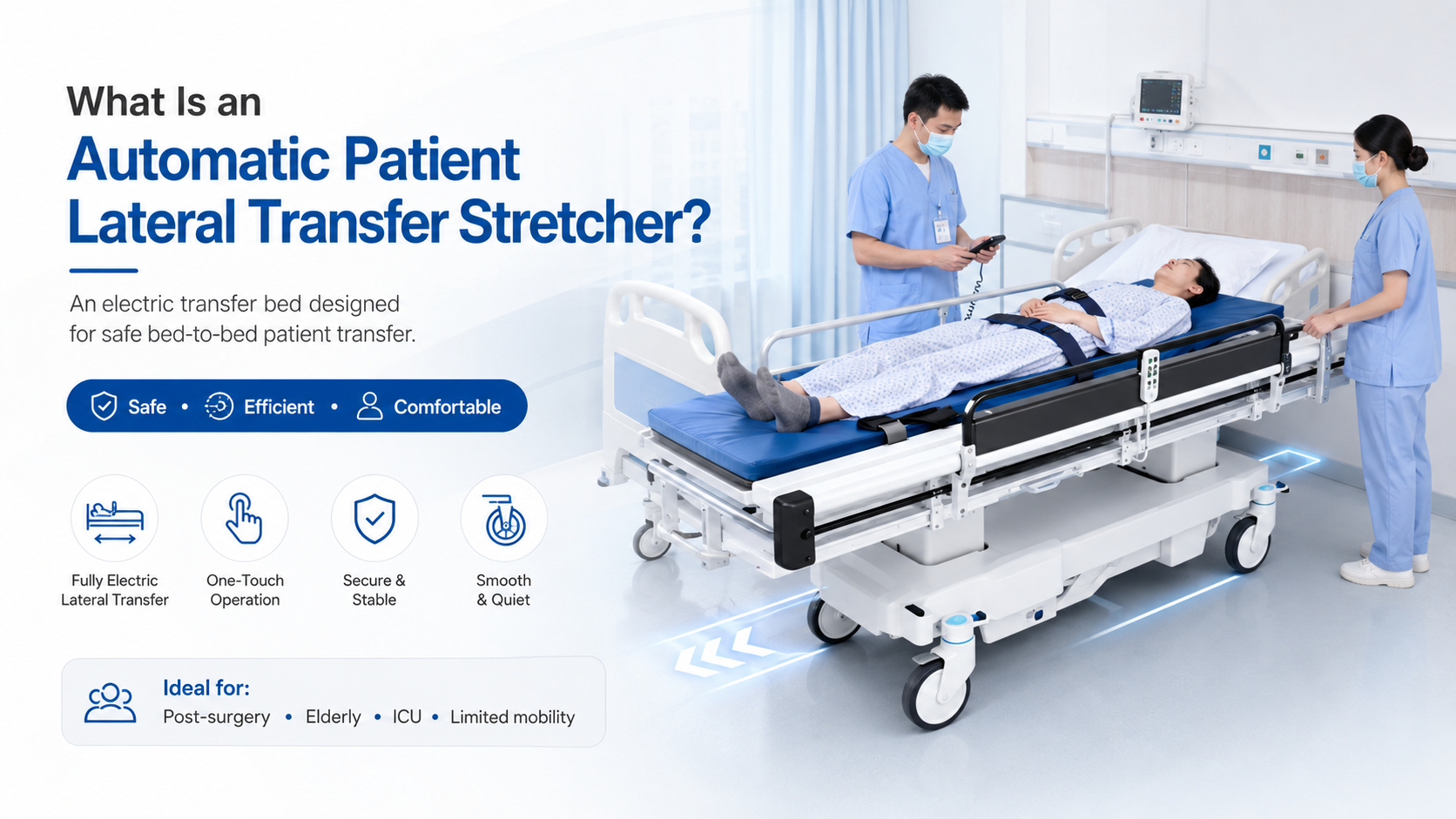
One mobile stretcher supports the complete journey: powered lateral transfer from a hospital bed, controlled in-hospital transport, and powered transfer to an operating table or another adjacent support surface.
Unlike a conventional transport trolley that only moves a patient after loading, the YuanPort stretcher is designed to support the lateral transfer stages at both ends of the journey. Trained staff remain responsible for patient assessment, line management, positioning, alignment and operation in accordance with the product instructions.
Place the stretcher parallel to the bed and align the two support surfaces for the intended transfer.
Operate the powered transfer surface to support controlled lateral movement onto the stretcher.
After transfer and required checks, use the same unit for movement to the destination department.
Realign the stretcher and use the powered surface for transfer to the receiving support surface.
Use real product photographs or short videos in the three media areas below. Demonstrating alignment, surface movement and destination transfer is one of the strongest ways to build overseas buyer confidence.
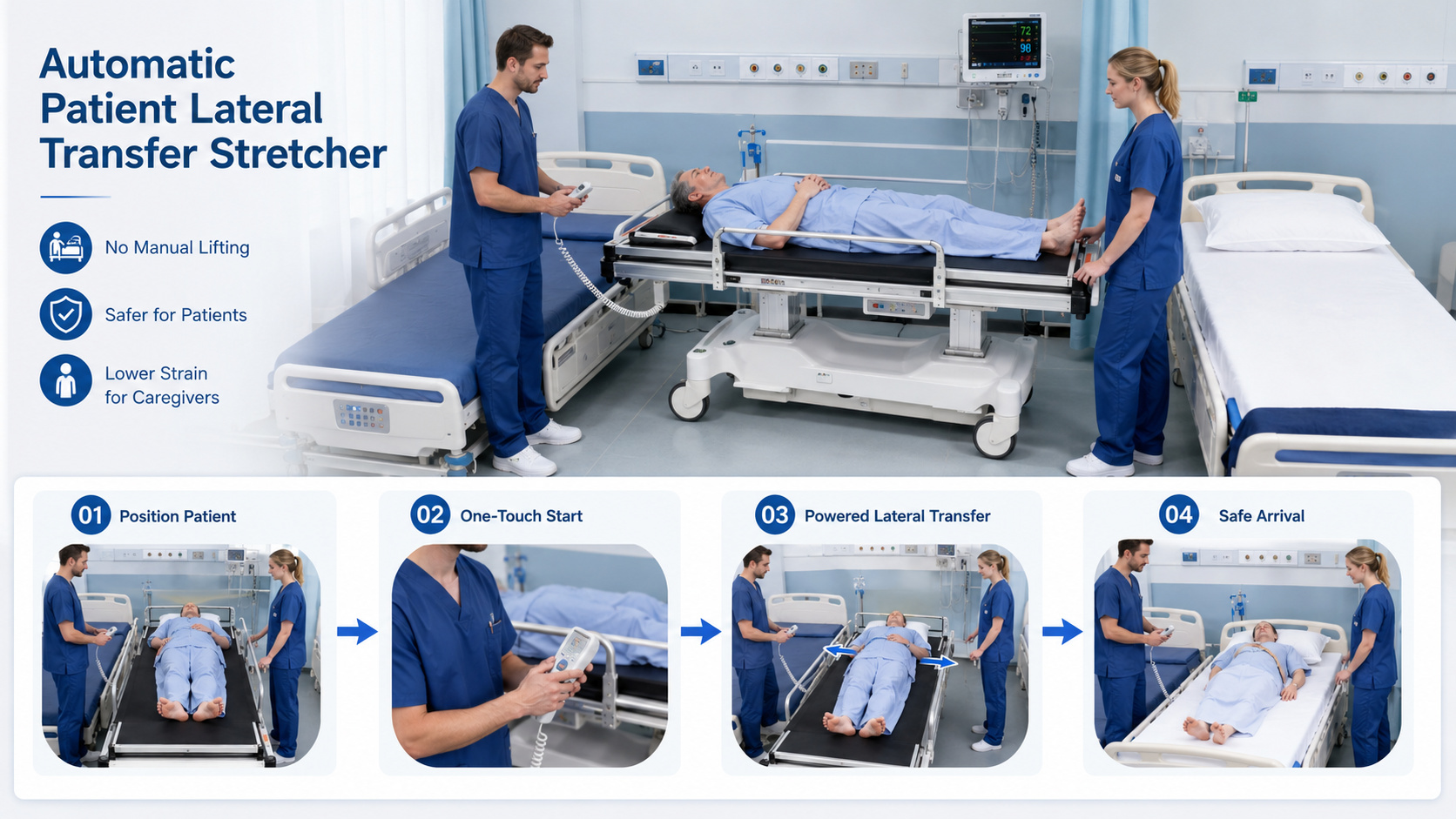
The operator brings the stretcher beside the hospital bed and prepares the transfer area. The objective is to create a suitable adjacent path for lateral movement before the powered transfer function is activated.
With the two surfaces prepared and aligned, trained staff operate the powered transfer surface. It supports lateral movement of the patient onto the stretcher while helping reduce the manual lifting, dragging and pulling associated with conventional handling.
After the patient is positioned and the transport checks are complete, the same equipment functions as an in-hospital transport stretcher. At the destination, staff prepare and align the receiving surface before operating the transfer function again.
The purchasing value is not simply “an electric trolley.” It is the integration of a powered lateral-transfer function with a mobile hospital stretcher, reducing the need to introduce a separate transfer aid at each end of the journey.
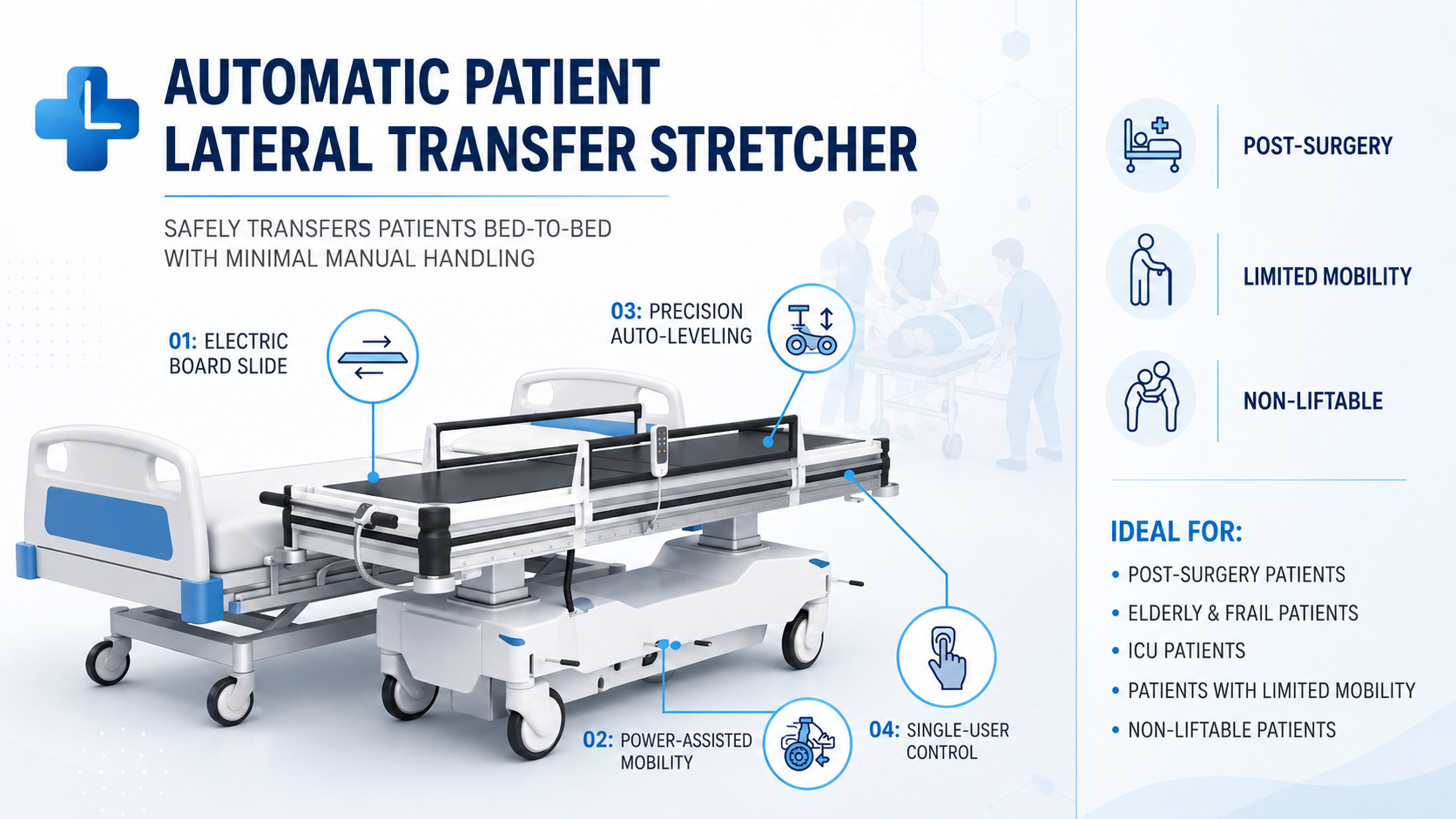
The exact mechanical design should be explained with your own labeled product diagram. Keep the public explanation understandable, while the technical pack can provide drawings, operating limits and configuration details.
Overseas buyers need more than marketing language. They need to understand how the equipment fits their rooms, surfaces, protocols and service capabilities.
Final suitability depends on the facility’s clinical protocol, patient assessment, room layout and the selected product configuration.
Transfer from a ward bed, transport through the hospital and hand over to the operating table.
Support the reverse journey from the operating table to the stretcher and back to a recovery or ward bed.
Support planned lateral movement where patient condition and line management permit use of the equipment.
Move between compatible hospital support surfaces as part of an established transfer protocol.
Support transfer to a compatible examination surface when allowed by the product documentation.
Assist repeated transfer workflows for suitable patients under trained supervision.
YuanPort is not presenting the stretcher only as a catalog item. Our value proposition combines product development and assembly with practical experience from joint hospital operation projects in China.
The product concept and continuing improvements are based on actual transfer needs and operating feedback. Provide buyers with a clear version history where commercially appropriate.
Assembly by YuanPort supports closer oversight of configuration, component selection, inspection and response to technical questions.
Operational experience informs discussions about equipment placement, staff coordination, usage management, training and maintenance response.
Overseas projects require accurate specifications, packing information, documentation, delivery coordination and a defined after-sales communication route.
A professional buyer should be able to verify the selected configuration rather than relying on general website statements. YuanPort can organize a technical discussion around your intended transfer surfaces, patient profile, workflow and local requirements.
Sharing these details helps avoid recommending an unsuitable configuration.
Availability and content depend on the final model and commercial stage. Replace this list with the exact documents YuanPort can actually provide.
No. Its differentiating function is the integration of powered lateral patient transfer with in-hospital stretcher transport. The exact functions depend on the selected configuration.
The powered surface is designed to help reduce manual lifting, dragging and pulling during suitable lateral transfers. Trained staff are still required for patient assessment, preparation, line management, alignment, observation, positioning and operation.
The website should state this only according to the final configuration and user manual. Where bidirectional operation is supported, describe the permitted directions and procedures in the technical documentation.
Do not assume universal compatibility. YuanPort should review surface height, dimensions, access, clearance and other interface conditions before confirming suitability.
Operation should be limited to trained personnel following the supplied instructions for use and the hospital’s policies. The sales proposal should clearly state the available training format and scope.
Support terms should be defined in the quotation or distribution agreement, including remote technical communication, spare-parts supply, maintenance materials, warranty scope and any local service responsibilities.
Use the inquiry form directly below this page to send your target country, intended departments, bed or operating-table information, required quantity and delivery timeline. The existing YuanPort contact template also provides WhatsApp, phone, email and appointment information.